
Comprehensive Audiograms
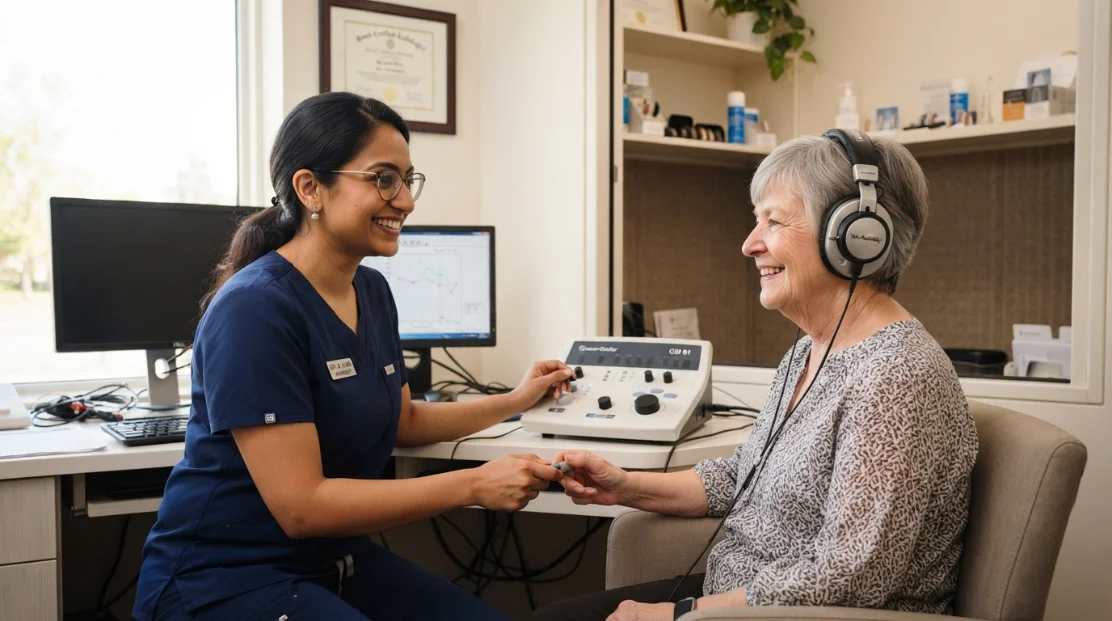
Beyond simple hearing checks, our diagnostic evaluations involve pure-tone air and bone conduction, speech reception thresholds, and word recognition testing in quiet and noise. This precise baseline supports accurate medical diagnosis and effective treatment planning.
Patient Care Philosophy
Patient-centered care at the heart of our practice.
Comprehensive Hearing Evaluations
Precision audiograms and diagnostic testing to help identify the root cause of hearing loss for patients of all ages.
Advanced Hearing Aid Technology
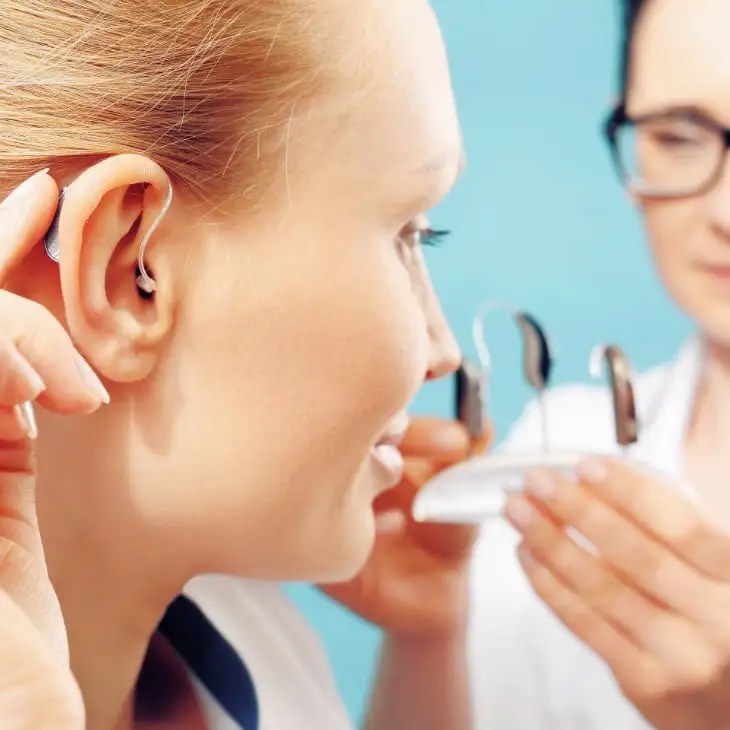
The latest digital and invisible-in-canal devices, mathematically tuned to your ear with Real-Ear Measurement.
Comprehensive Hearing Aid Evaluations
Evidence-based evaluations that match the right technology to your hearing loss, lifestyle, and communication needs.
Hearing Aid Adoption
Bringing hearing aids you purchased elsewhere under the care of our audiology team — programming, verification, and follow-up.
Cochlear Implant Evaluation & Care
A comprehensive program for patients who receive limited benefit from traditional hearing aids.
Osseointegrated (Bone-Anchored) Hearing
Advanced bone-conduction solutions for conductive, mixed, or single-sided hearing loss.
Hearing Aid Evaluation
Comprehensive Hearing Aid Evaluations
Evidence-based evaluations that match hearing aids to your hearing loss, lifestyle, and communication needs — with no pressure to decide the same day. Here is what the visit looks like, what it includes, and how to prepare.
At your visit
Review of your hearing test
We go over your results to see how your hearing affects speech understanding. A valid hearing test from within the past 6 months is required.
Review & demonstration
We walk through your results together and let you experience the technology firsthand.
Your personalized plan
You leave with clear recommendations and next steps — and no obligation to decide on the spot.
A medical evaluation may come first. An ENT visit may be recommended before fitting, to rule out treatable causes of hearing loss.
What your evaluation includes
Lifestyle & communication assessment
We talk through where you struggle to hear — work, restaurants, the phone, the TV — so the technology fits your day, not just your audiogram.
Hands-on technology demonstrations
Try current hearing aids in the office and hear the difference for yourself, before any commitment.
Insurance coverage verification
We review your benefits with you and encourage you to confirm coverage with your insurer, so there are no surprises.
How to prepare
- Bring someone with you — a partner or family member helps us understand the voices you most want to hear.
- Note your toughest settings — jot down where hearing is hardest. Real examples help us fine-tune the recommendation.
- Think about your preferences — Bluetooth streaming, how visible the device is, smallest possible size versus best possible performance.
- Some cases need booth testing — certain losses call for additional testing with and without hearing aids, to guide the right technology.
Our independence
- We are not contracted with third-party or managed-care hearing benefit networks.
- Full access to every major brand and technology level — not a network's limited list.
- No network caps on visits, adjustments, or follow-up care.
- Recommendations based on your hearing needs, not a third party's approved pricing.
No affiliations or incentives with any manufacturer — recommendations are based solely on what's best for your hearing.
About 60 min
Plan for about an hour.
Commit to consistent use
A successful fitting is one that gets worn. Hearing aids work best — and adjusting to them tends to go faster — when you wear them at least 8 hours a day, every day.
Devices From Another Clinic
Hearing Aid Adoption
Bringing hearing aids you purchased elsewhere under the care of our audiology team. If you bought your devices at another clinic, our adoption program moves their care to Pacific ENT — we set them up for the way you hear and keep them performing through your first year.
Confirm your brand first. Some clinics and big-box retailers lock hearing aid programming so other providers can't adjust it. We'll confirm your device brand is unlocked before scheduling your adoption appointment.
One-time setup
Covers initial setup plus a full year of follow-up care, from the date your devices are first programmed.
Ask about adoptionWhat adoption includes
What it doesn't cover
- Office visits with an ENT physician or physician assistant
- Hearing tests, which are billed separately to insurance
- The plan is specific to Pacific ENT and is not transferable to another clinic
Your first fitting — what to expect
Fit & comfort check
We make sure each device sits securely and comfortably in your ear.
Fine-tuning to you
Settings are adjusted to your hearing and verified using either real-ear or test box measurements, so speech sounds clear.
Care & wear guidance
You'll learn how to insert, clean, and care for your devices day to day.
Please work with one provider at a time. Seeing two audiologists for the same devices can lead to conflicting adjustments and a disconnect in your care.
Otology
Ear, Hearing & Balance
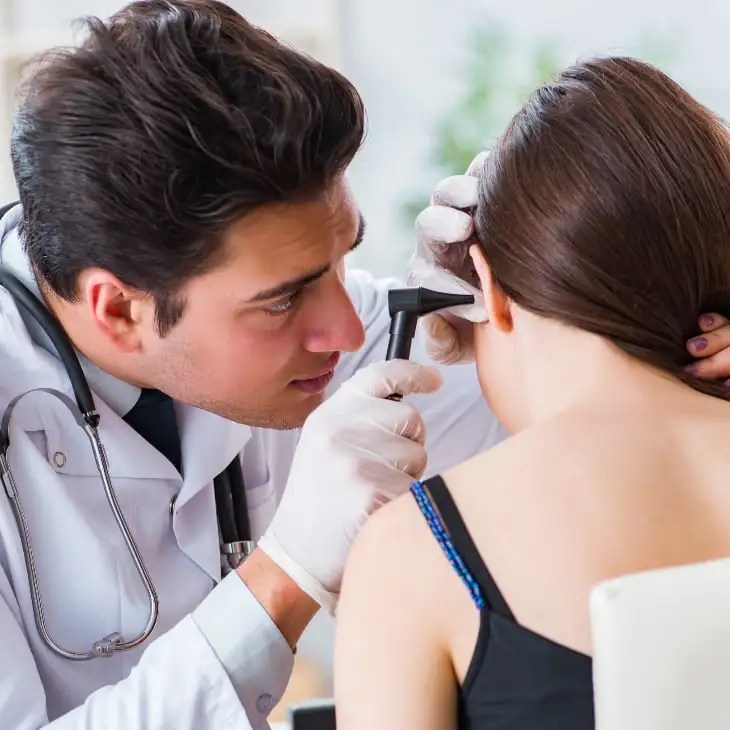
Our otolaryngologists and audiologists provide advanced care for disorders of the ear, hearing, and balance — from everyday earwax and infections to Meniere's disease, surfer's ear, and vertigo. Below are the conditions we treat most often, with guidance on when to see a specialist.
Conditions we treat
- Earwax (cerumen)
- Dizziness, vertigo & motion sickness
- Meniere's disease
- Tinnitus
- BPPV
- Implantable hearing solutions
Understanding common ear & balance conditions
Earwax (cerumen) When it helps, when to leave it alone, and when to get help.
What it can feel like
- A blocked or full feeling in the ear
- Muffled hearing that came on gradually or suddenly
- Itching or irritation in the ear canal
Earwax is made by the ear canal to protect and moisturize it, and it normally dries and works its way out on its own. Cotton swabs and hairpins tend to push it deeper instead, where it can block the canal and muffle hearing.
If an ear feels blocked, softening the wax at home is a reasonable first step — hydrogen peroxide, over-the-counter softening drops, mineral oil, or glycerin. Never use drops if you have a hole in the eardrum, a recent ear injury, or an active infection.
If the ear stays blocked after home care, or there is pain, drainage, or hearing that doesn't come back, come in. We remove wax gently under a microscope, and occasionally that's the whole visit.
A word of caution: ear candling Popular, but ineffective and potentially dangerous.
What it can feel like
- Promoted as a natural way to draw out earwax and "toxins"
- Studies show no vacuum effect — the residue left behind is candle wax, not earwax
Ear candling (or coning) places a hollow, lit candle in the ear canal with the promise of drawing wax out. It doesn't. Studies show there is no vacuum effect, and the residue left in the candle is simply candle wax.
Worse, dripping wax can burn or even perforate the eardrum. The FDA has warned that ear candles are dangerous when used this way. Please don't spend your money or risk your ears on it.
If wax is genuinely bothering you, gentle removal under a microscope is quick, safe, and usually a short visit.
Meniere's disease Vertigo attacks, fluctuating hearing loss, tinnitus, and ear fullness.
What it can feel like
- Attacks of vertigo lasting twenty minutes to several hours
- Fluctuating hearing loss, usually in one ear
- Tinnitus and a feeling of fullness in the affected ear
- Nausea during attacks, and days of feeling off-balance afterward
Meniere's disease is thought to involve a buildup of excess fluid in the inner ear, which disrupts the signals the ear sends to the brain for both hearing and balance. It usually affects one ear.
Diagnosis starts with a hearing test and balance testing, with further measures — such as electrocochleography or an MRI to rule out other causes — when they are warranted.
Treatment usually begins conservatively: a low-salt diet, a diuretic to help reduce inner-ear fluid, and medication to ease symptoms during attacks. When more is needed, the ENT physicians are part of the same practice, and that conversation happens without a referral getting lost.
Surfer's ear (exostosis) Bony overgrowth in the ear canal from cold water and wind.
What it can feel like
- Water that stays trapped in the ear after surfing or swimming
- Ear-canal infections that keep coming back
- Gradual hearing loss, usually in both ears
Exostosis — "surfer's ear" — is an overgrowth of bone in the ear canal caused by repeated exposure to cold water and wind: surfing, diving, sailing, kayaking. The narrowed canal traps water, which leads to infections and, over time, hearing loss. Once formed, it does not go away on its own.
Prevention is the best treatment. Keep cold water and wind out with a hood or well-fitted earplugs, and dry your ears after every session. Custom surf plugs are something we make here.
In advanced cases the bony growths can be removed in an outpatient canaloplasty, coordinated with the ENT surgeons in this practice, with clear guidance on keeping the ear dry while it heals.
Benign paroxysmal positional vertigo (BPPV) 'Loose crystals' in the inner ear — a very common cause of vertigo.
What it can feel like
- Brief spinning sensations triggered by changes in head position
- Episodes lasting seconds to minutes, sometimes with nausea
- A lingering sense of imbalance between episodes
BPPV is one of the most common causes of vertigo — the feeling that you or the room is spinning. Tiny calcium crystals in the inner ear's balance organ come loose and send confusing signals to the brain whenever your head changes position.
It is diagnosed in the office with positional testing, such as the Dix-Hallpike test, and treated with a repositioning maneuver — the Epley maneuver — that guides the crystals back where they belong.
One thing worth knowing: hearing loss, vision changes, or fainting are not part of BPPV. If those are happening, tell us — they point to a different diagnosis, and the ENT physicians are down the hall.
Take the first step toward better hearing.
Early detection can help support long-term hearing health, cognitive wellness, and quality of life. Schedule your initial consultation with our doctors today.
Or call 858-755-9343