Carlsbad, CA 858-755-9343
Now Accepting Patients pacific-ent.com

Audiology & Hearing Aids

Healthy hearing, guided by specialists

Our ENT doctors and audiologists work together to cover the whole spectrum of hearing disorders. If we identify a hearing loss, we partner with you to determine the best care for your ears.

The Basics

How the Ear Works

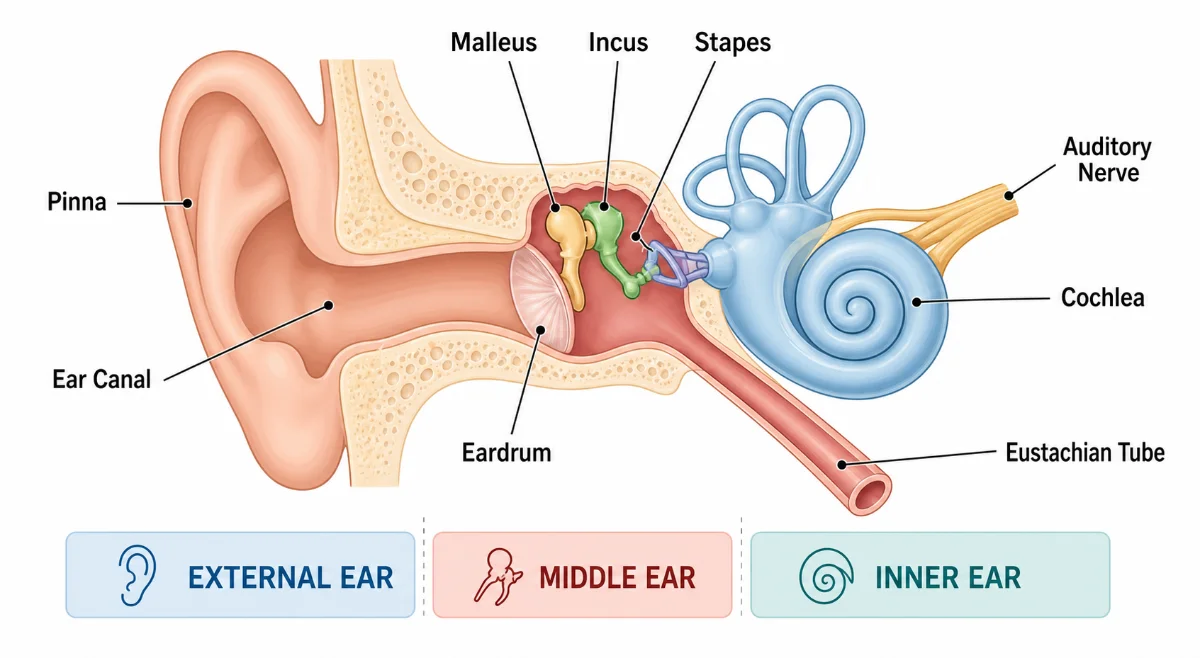
The outer ear funnels sound to the eardrum, whose vibrations pass through the tiny bones of the middle ear — the malleus, incus, and stapes. The Eustachian tube equalizes pressure in this space.

Those vibrations travel into the fluid-filled cochlea, where tiny hair cells convert movement into nerve impulses the brain interprets as sound. The inner ear also houses the vestibular system, which governs balance and coordination.

Diagram of the outer, middle, and inner ear

Diagnostics

Comprehensive Hearing Tests

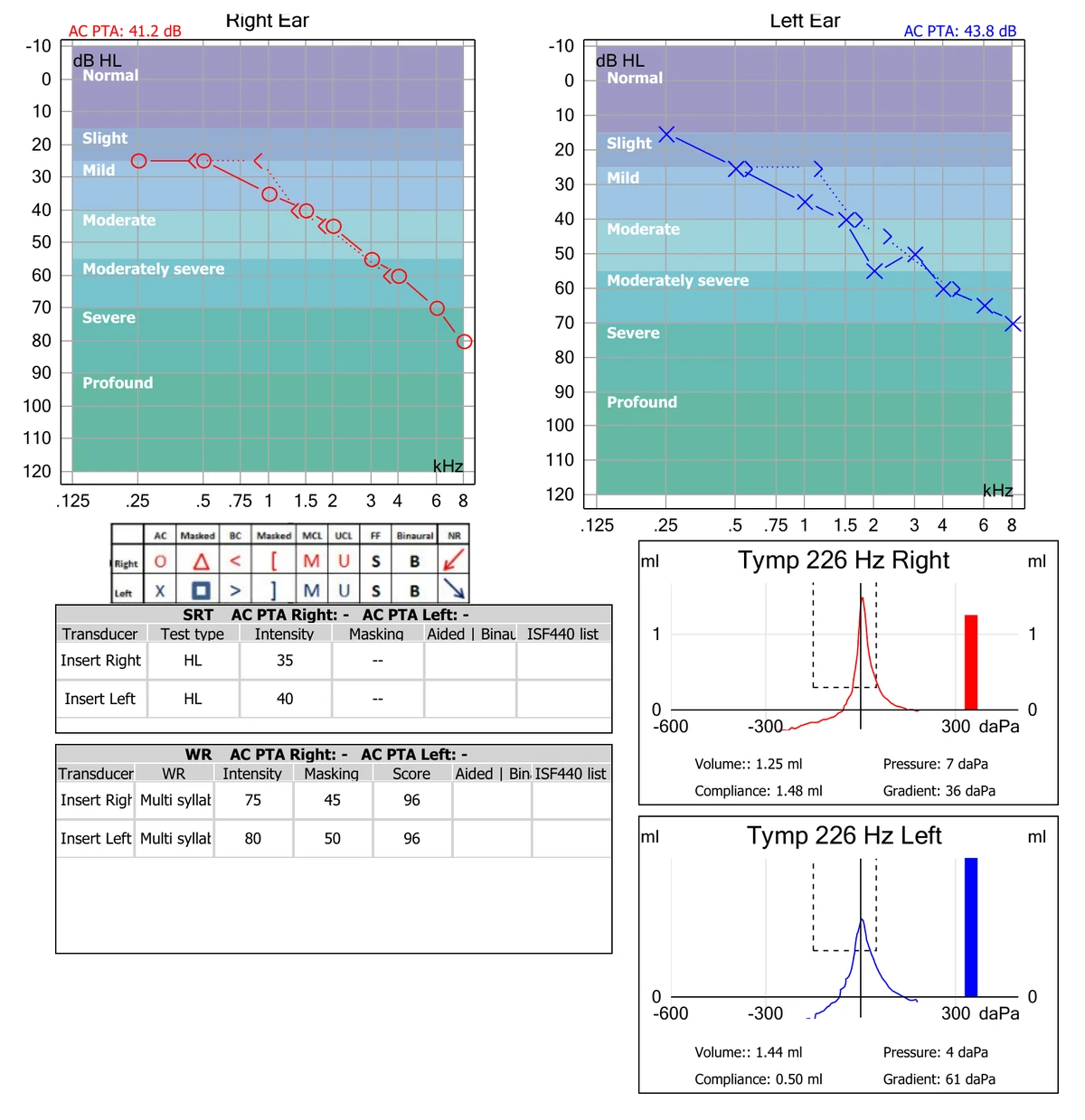
Your audiogram maps the quietest sounds you can hear across pitch (Hz) and volume (dB). Red marks the right ear, blue the left; air conduction is tested with headphones and bone conduction with a device behind the ear. We also measure word recognition — how clearly you understand speech in quiet.

How to Interpret Your Audiogram

The audiogram is a picture of your hearing. Pitch (frequency, in Hz) runs left to right — low to high, like keys on a piano — while volume (in dB) runs top to bottom, quiet to loud. Anything better than 20 dB HL is considered normal; greater levels indicate some degree of hearing loss.

Red symbols map the right ear and blue the left. Circles and X's mark air conduction (through headphones); brackets mark bone conduction (through a device behind the ear). Your word-recognition score shows the percentage of words you understand clearly in quiet.

Sample audiogram report: right- and left-ear hearing thresholds, the test symbol key, speech testing results, and middle-ear tympanometry (illustrative)
A sample report in the format we use — thresholds for each ear, the symbol key, speech testing, and middle-ear measurements. Illustrative example, not a patient's chart.

Three types of hearing loss

Sensorineural

Most common · often permanent

Damage to the inner ear or hearing nerve. Common causes include aging, genetics, noise exposure, and ototoxic medications. Hearing aids or other amplification often help.

Conductive

Often treatable

A problem in the outer or middle ear blocks sound from reaching the inner ear — middle-ear fluid, a perforated eardrum, earwax, infection, or Eustachian tube dysfunction. Often correctable with medication or surgery.

Mixed

Combination

A conductive hearing loss layered on an underlying sensorineural loss. The conductive part may be correctable, while the sensorineural component is permanent.

Why you may need a hearing test

Hearing difficulty

Determines the type and degree of hearing loss so your doctor can plan appropriate treatment.

Tinnitus

Many causes of ringing in the ears connect to hearing — we check for underlying concerns first.

Clogged / full ears

Pressure and fullness can stem from many conditions; the test helps pinpoint the cause.

Dizziness / imbalance

The inner ear governs both hearing and balance, so the two are closely linked.

Amplification

Your Hearing Aid Journey

From consultation to fitting to lifelong follow-up, we guide every step — and verify every device with Real-Ear Measurement.

Manufacturers we work with

  • Phonak
  • ReSound
  • Oticon
  • Widex
  • Signia
  • Starkey

We have no agreements, affiliations, or incentives with any manufacturer to sell their products — our recommendations are based solely on what's best for your hearing.

01

Hearing Aid Consultation

A ~1-hour visit covering your hearing history and needs, with a hands-on listening experience. Bring a spouse or family member for added insight.

02

Device Selection

Your audiologist helps you choose the right hearing aids from manufacturers including ReSound, Oticon, Phonak, Widex, and Starkey.

03

Fitting with Real-Ear Measurement

Devices are programmed to your exact hearing loss and verified with Real-Ear Measurement, with a 45-day adjustment period.

04

Ongoing Follow-up Care

Your hearing aid prescription includes either 1 or 3 years of office visits to maintain your devices and adjust the prescription as your hearing changes. We provide all follow-up care — even for aids purchased elsewhere.

The Gold Standard

Why Real-Ear Measurement matters

Every ear canal is a different shape and size, so the same hearing aid delivers different sound in different ears. Real-Ear Measurement (REM) places a tiny probe microphone in your ear canal to measure exactly what the device is producing at your eardrum — not an estimate, but your real, individual output.

We use that measurement to match your hearing aids to research-based prescription formulas like NAL-NL2 and DSL v5 — validated targets that specify precisely how much amplification you need at each pitch. REM-verified fittings can improve speech understanding and patient satisfaction over fittings tuned by ear alone.

Verified to your real ear canal, not a factory average
Matched to evidence-based targets (NAL-NL2, DSL v5)
Better speech clarity and higher satisfaction

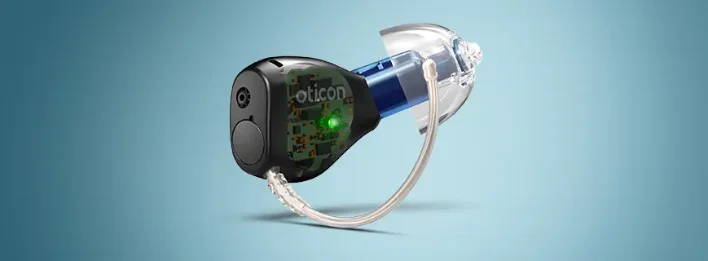
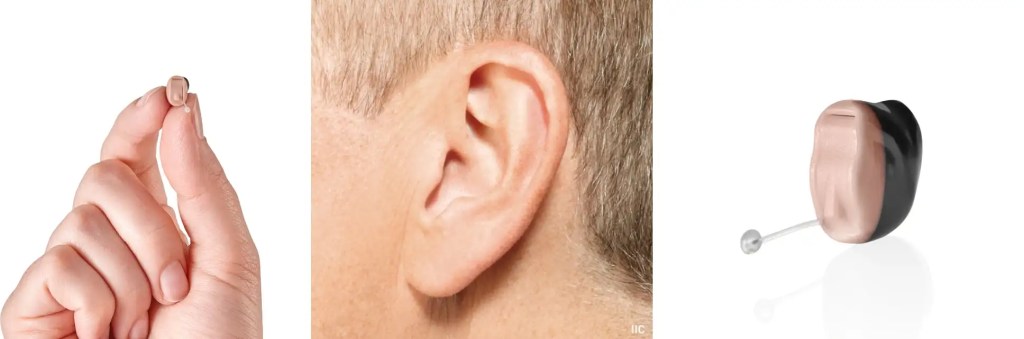
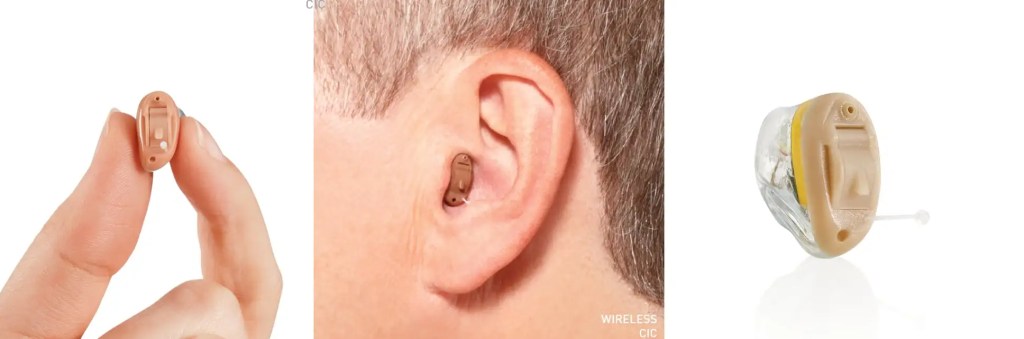
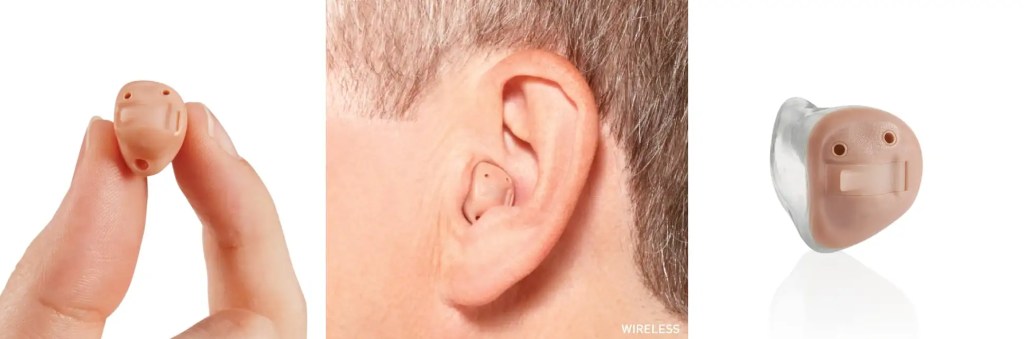
Hearing aid styles

Additional options

Rechargeable Batteries

Lithium-ion batteries hold up to 30 hours of charge — convenient and great for dexterity concerns.

Phone Connectivity

Stream calls directly to your hearing aids and adjust volume or programs from an app.

Telecoil

Picks up induction-loop signals for clearer sound in noisy public spaces.

Accessories

Remote microphones and TV connectors stream sound straight to your hearing aids.

Single-Sided Hearing

CROS & BiCROS Systems

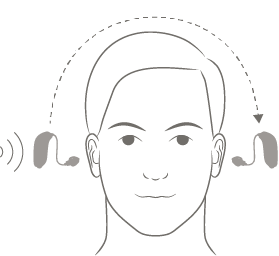
When one ear has hearing that can't be helped by a standard hearing aid — often called single-sided deafness — sound arriving from that side is easy to miss. CROS and BiCROS systems restore awareness of your weaker side by wirelessly routing its sound over to your better-hearing ear, with no surgery involved.

Line drawing of a head wearing a small device on each ear, with a dashed arc over the head showing sound picked up at the poorer ear being routed across to the better-hearing ear
Sound arriving at the poorer ear is picked up and sent across the head to the ear that can use it.

How it works

One system, two ears working together

A discreet device worn on your poorer ear picks up sound and streams it wirelessly to a device on your better ear — so speech and sounds from your weaker side reach an ear that can actually use them.

Poorer ear — the transmitterA tiny microphone captures sound from your unaidable side.
Better ear — the receiverDelivers that sound to the ear best able to process it.

CROS for a normal-hearing better ear

Contralateral Routing of Signal. Sound from your poorer ear is sent across to your good ear, which hears normally and needs no amplification of its own.

BiCROS for a better ear that also needs help

Bilateral CROS. Sound from your poorer ear is routed across and your better ear is amplified for its own hearing loss — one system doing both jobs at once.

A CROS or BiCROS system may help if you have

Single-sided deafness from sudden hearing loss, acoustic neuroma surgery, trauma, or infection
Trouble following conversation when speech is on your weaker side
Difficulty telling where sounds are coming from in a room
A better ear that hears normally (CROS) — or one that also has some hearing loss (BiCROS)

What to expect

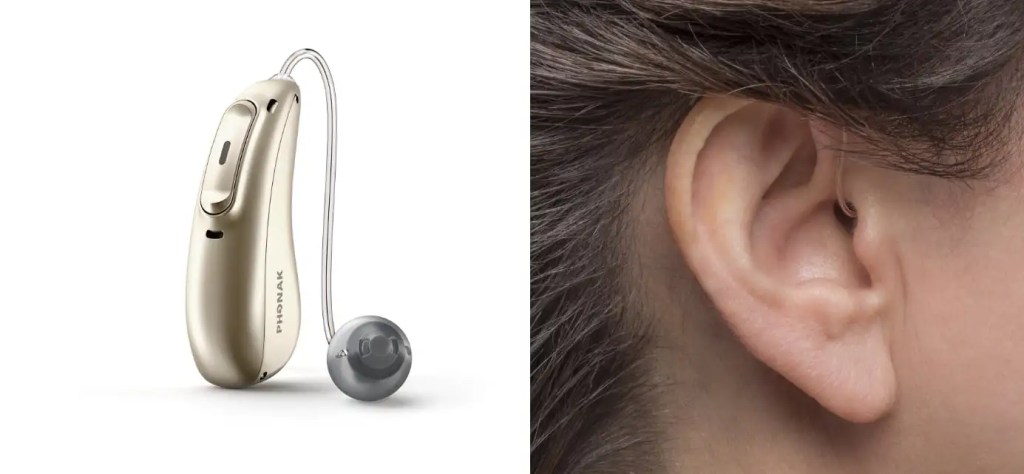
No surgeryDiscreet RIC / BTE stylesBluetooth streamingRechargeable optionsSame wireless platform

A non-surgical alternative to a bone-anchored implant — worth comparing side by side with your audiologist.

Ask about CROS / BiCROS

Clinic vs. Over-the-Counter

Why choose an audiology clinic?

OTC and big-box hearing aids can seem convenient, but hearing is medical. Here's what doctor-led care gives you that a retail shelf can't.

Pacific ENT Audiology Clinic

Doctor-led, personalized care

Doctoral-level diagnosis of the root cause — not just the symptoms
Real-Ear Measurement so devices are precisely tuned to your ears
Medical screening that can catch treatable or serious conditions
Personalized fittings with ongoing follow-up and fine-tuning
Coordinated ENT care for balance, tinnitus, and surgical needs
Insurance guidance and one-on-one professional counseling

OTC & Big-Box Stores

Off-the-shelf, self-guided

One-size-fits-all amplification with no true diagnosis
No Real-Ear verification — sound is rarely matched to your loss
Underlying medical issues can go undetected
Little to no professional follow-up or adjustment
No pathway to medical or surgical treatment
Self-guided setup with limited expert support
Talk to a Doctor of Audiology

Ringing in the Ears

Tinnitus Management

Tinnitus — ringing, hissing, roaring, or whooshing when no sound is present — affects 10–15% of Americans. It's a symptom, not a disease, and is often tied to hearing loss, noise exposure, medications, stress, or earwax.

The most effective approach treats the underlying cause; when the cause is unknown, tinnitus can still be managed effectively.

Common management methods

Improve general wellness — reduce caffeine, alcohol, and tobacco; exercise; stay socially active; manage stress; and rest well
Hearing aids increase auditory stimuli and can divert attention from the tinnitus
Sound therapies stimulate the brain and help desensitize you to the tinnitus

Recommended apps

myNoiseReSound Tinnitus ReliefOticon Tinnitus SoundWidex ZEN TinnitusWhite Noise LiteTinnitus Therapy LiteRelax MelodiesSleep Bug

Beyond Hearing Aids

Implantable Hearing Solutions

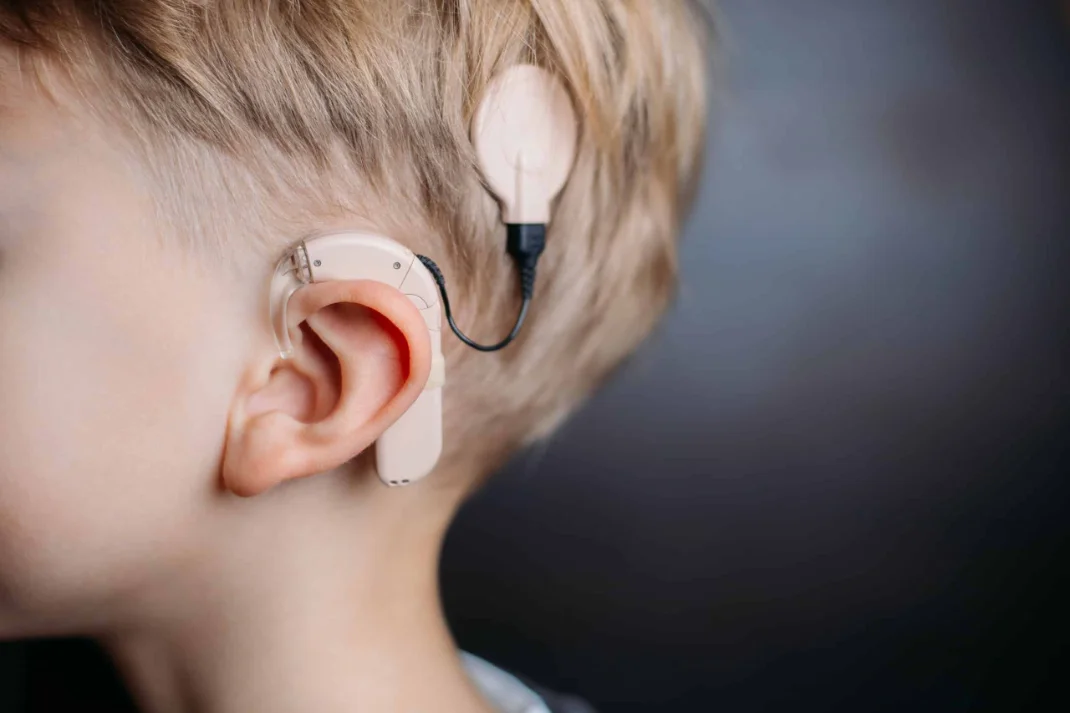
A child wearing a cochlear implant — a behind-the-ear sound processor with a thin cable running to a round transmitter coil held against the head.

Cochlear Implants

For individuals who no longer benefit from hearing aids, a surgically implanted electrode directly stimulates the hearing nerve. The journey includes a candidacy evaluation, an outpatient surgery (~2–3 hours), activation 3–4 weeks later, and ongoing programming and rehabilitation with your audiologist.

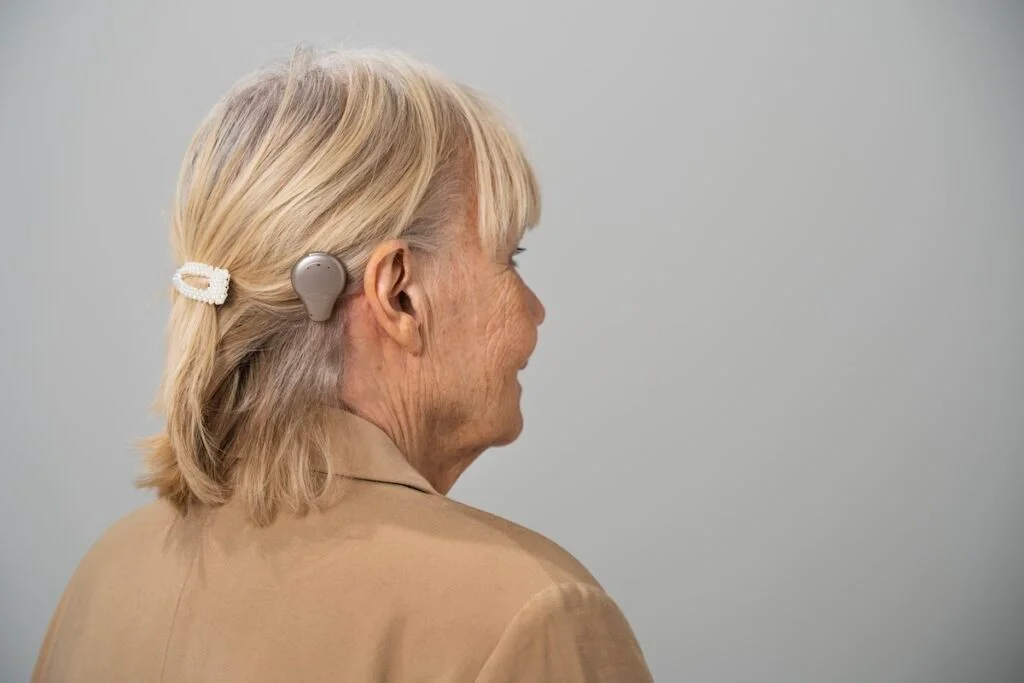
An older woman seen from behind, wearing a small bone conduction processor on the skull just behind her ear.

Bone Conduction Devices

For conductive or mixed hearing loss or single-sided deafness, the device converts sound into vibrations that travel through the skull to the inner ear. A simple outpatient implant, with processor fitting one to three months after surgery.

Manufacturers we work with

  • Cochlear Americas
  • Advanced Bionics
  • Oticon Medical
  • MED-EL

Prevention

Hearing Protection & Custom Earplugs

Sounds below 70 dBA are generally safe; above 85 dBA can damage hearing depending on exposure time. For every 3 dBA over 85, safe listening time is cut in half.

Wear hearing protection

Use earplugs or earmuffs with a high Noise Reduction Rating (NRR). Custom earplugs from an audiologist ensure proper fit.

Turn down your music

Keep device volume at or below 50%.

Limit loud exposure

Take breaks from noise and move away from loud sources when you can.

Use quieter products

Check noise ratings on appliances, tools, and equipment.

Custom earplugs

Musician Earplugs

Filtered plugs that reduce volume evenly across frequencies to preserve sound quality. Choose 10, 17, or 26 dB attenuation.

Solid Earplugs

Maximum attenuation for high-noise occupational or recreational settings.

Surfer Plugs

A semipermeable vent lets sound through while keeping water out — helping prevent surfer's ear.

Swim Plugs

Floatable material keeps water out — ideal for recurrent ear infections, perforations, or ear tubes.

FAQ

Common hearing & hearing-aid questions

Will using hearing aids make my hearing worse?

No. Hearing aids programmed to your prescription and verified with real-ear measurement have output limits that keep sound within safe levels. The world may seem sharp at first while your brain re-adapts — that settles with steady wear.

How do over-the-counter devices differ from a prescription fitting?

Over-the-counter hearing aids are devices you set up yourself, and for some adults with milder loss they're a reasonable place to start. A prescription fitting is different: it's programmed to your measured hearing and verified in your ear canal with real-ear measurement. If you're weighing the two, we'll walk you through the trade-offs honestly — including when trying OTC first makes sense.

Why choose RIC aids if custom aids can be invisible?

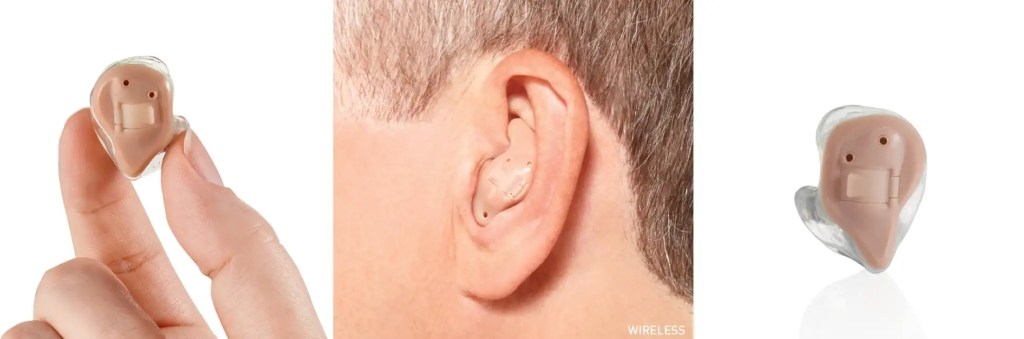
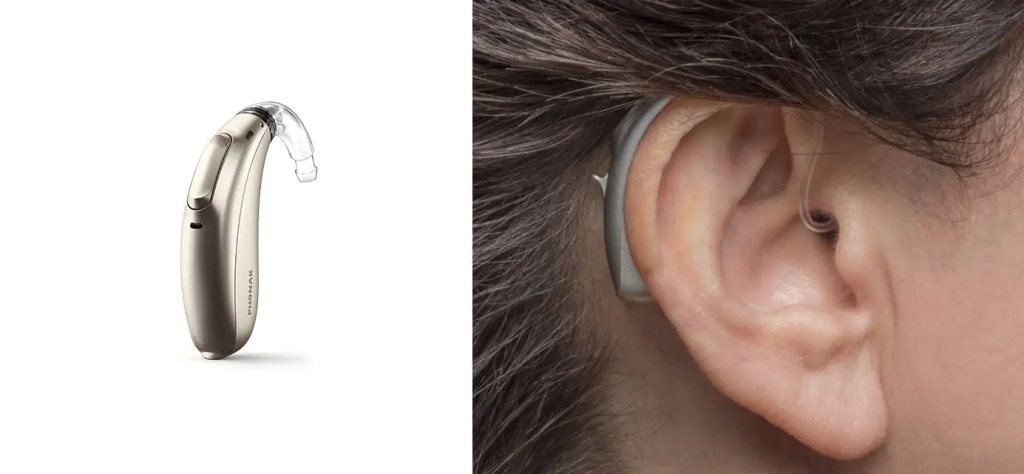
Because the speaker sits separately from the body of the device. That makes maintenance and repairs simpler, and it means the speaker can be upgraded on its own if your hearing declines — without replacing the whole hearing aid. Smaller is a trade, not an upgrade. We'll walk through which style fits your hearing, your hands, and your habits.

Which brand is best?

There isn't one. The major manufacturers all make good instruments with similar styles and features, and sound preference varies from person to person. What matters more is the fitting: whatever the brand, we verify it against your prescription with real-ear measurement.

Will hearing aids help my tinnitus?

Often, yes. Tinnitus tends to be loudest when hearing loss leaves it nothing to compete with, so bringing back the sounds you've been missing can make the ringing much less noticeable. Some hearing aids can also add quiet background sound that helps. Relief varies from person to person — we'll be honest with you about what to expect.

Ready to hear your best?

Schedule a comprehensive hearing evaluation with our audiology team in Carlsbad.